The Paradox of Achievement
“Congratulations!”
The applause echoed across the hall as Neha walked up to receive her long-awaited promotion letter. A decade of late nights and endless deadlines had finally paid off. Her company called her a “success story.” Yet that night, while driving home through the chaos of the city, Neha found herself strangely restless.
The thrill of achievement faded faster than expected.
She had gotten “there.” But something within whispered — “Is this all?”
I’ve met countless leaders, students, and entrepreneurs who echo that same sentiment. They’ve checked every box society told them to, yet feel a quiet dissonance — a gap between what they do and who they are.
That gap has a name: a missing sense of purpose.
Why Purpose Matters More Than Passion
We often confuse purpose with passion. Passion fuels excitement, but purpose sustains endurance.
Passion says, “I love doing this.”
Purpose says, “This is worth doing, even when I don’t love it every day.”
In his classic book Man’s Search for Meaning, Holocaust survivor Viktor Frankl wrote, “Those who have a ‘why’ to live can bear almost any ‘how’.” He wasn’t talking about career goals or personal comfort; he was describing the human need for meaning — something larger than ourselves.
(You can explore his remarkable insights here.)
Purpose anchors us in turbulent times. It prevents burnout, reorients our values, and adds depth to even mundane tasks. Without it, success becomes motion without meaning.
The Inner GPS
Think of purpose as your inner GPS.
You may drive a powerful car, filled with fuel (skills, education, ambition), but if you haven’t entered a destination, you’ll just circle endlessly — fast, but directionless.
When I ask people, “What’s your purpose?”, I rarely get an immediate answer. Some speak of money, others of family, or service. All are valid, but few have reflected long enough to articulate it clearly.
Here’s a starting point: purpose lies at the intersection of three questions:
- What comes naturally to me? (Your strengths)
- What breaks my heart? (Your compassion)
- What change would I love to see in the world — even if no one paid me? (Your conviction)
Where those three overlap, you’ll often find your “why.”
Lessons From the Marathon, Not the Sprint
When I first wrote Getting There, I compared life to a marathon, not a sprint. Sprints reward speed; marathons reward endurance. In the long run, it’s not the fastest who win but those who pace themselves with clarity.
I once coached a young executive who wanted to quit her job because she felt “stuck.” We spent time identifying what gave her energy. Through that process, she realized she didn’t actually hate her job — she hated the way she was doing it. She had forgotten the deeper “why” behind her career.
Once she reconnected with that purpose — empowering young women in her organization — her energy returned. Same office, same workload, but now with meaning.
That’s the quiet miracle of alignment: when what you do resonates with why you do it, life regains rhythm.
The Myth of Balance
We often talk about “work-life balance,” but real alignment isn’t about dividing time equally; it’s about integrating purpose into all parts of life.
When your core values guide your decisions, you don’t have to constantly juggle. You simply live with integrity — the same “you” at work, home, or alone.
Ask yourself:
- Do my daily choices reflect what I claim to value?
- Am I pursuing things that look good externally but drain me internally?
As writer Annie Dillard once said, “How we spend our days is, of course, how we spend our lives.”
Purpose makes sure those days count.
Finding Clarity in the Noise
In an age of constant distraction, clarity is a superpower.
Social media celebrates quick success — the “top 30 under 30,” the entrepreneur who “made it overnight.” But purpose asks deeper questions:
- What will matter a decade from now?
- Who am I becoming in the process of chasing my goals?
It’s easy to be busy and still be off-track. A good practice is to schedule “purpose audits.”
Once a month, pause and ask: Is my work, my time, and my relationships moving me closer to what truly matters?
Small course corrections can prevent large regrets later.
For further reading on reflective practices, you might enjoy this research from Harvard Business Review on the importance of regular reflection.
Purpose Evolves
When I was younger, purpose meant achievement — doing well, climbing ladders, making an impact. Over time, it shifted toward significance — helping others climb their ladders.
That’s the beauty of purpose: it matures as we do. What once defined success may later feel shallow, and that’s okay. Growth demands new definitions.
Don’t fear reinvention.
Maybe the purpose that once guided you in your 20s needs a new shape in your 40s. Or perhaps parenthood, loss, or a career change reshaped your view of what truly matters.
Life is dynamic — your “why” should be too.
How to Align Your Life with Purpose (Step-by-Step)
Let’s make it practical. Here are five steps to realignment:
1. Pause and Reflect
Set aside quiet moments weekly. Ask: What activities make me feel alive? Which ones leave me drained?
Write them down. Clarity begins on paper.
2. Define Your Core Values
List your top five non-negotiables — values you won’t compromise even under pressure. Integrity, family, growth, faith, creativity — whatever they are, name them.
3. Simplify Your Commitments
Many of us chase too many things. Say no to good opportunities so you can say yes to great ones. Alignment thrives on focus.
4. Seek Mentors or “Ladder Holders”
Surround yourself with people who help you climb without losing your balance. A mentor keeps your purpose anchored when life feels shaky.
5. Translate Purpose into Practice
Don’t wait for a perfect moment. Begin where you are — through small acts of meaning.
Teach, write, help, create, encourage. Purpose grows in motion.
The Role of Gratitude and Service
Gratitude is the quiet twin of purpose. It grounds us when progress feels slow.
Each morning, write down three things you’re thankful for — not grand things, just real ones. Gratitude shifts focus from what’s missing to what’s meaningful.
And when your purpose benefits others, not just yourself, it multiplies impact. The goal of purpose is not personal perfection but contribution.
Even research from the Greater Good Science Center at UC Berkeley shows that purposeful living improves emotional health, resilience, and longevity. Science is catching up with what wisdom has said for centuries — giving meaning gives life.
When Purpose Feels Far Away
There will be seasons when purpose seems blurry — when you question whether you’re on the right path. That’s okay.
Don’t confuse silence for absence. Sometimes, the best insights emerge after stillness.
When in doubt:
- Return to what first inspired you.
- Serve someone else — purpose often reveals itself in compassion.
- Remember that alignment isn’t found once; it’s maintained daily.
As I often tell my coaching clients, clarity is not a lightning strike; it’s a sunrise. It unfolds gradually, illuminating one step at a time.
From “Getting There” to “Staying There”
Purpose helps us get there — it gives direction.
But consistency, humility, and grace help us stay there — they give endurance.
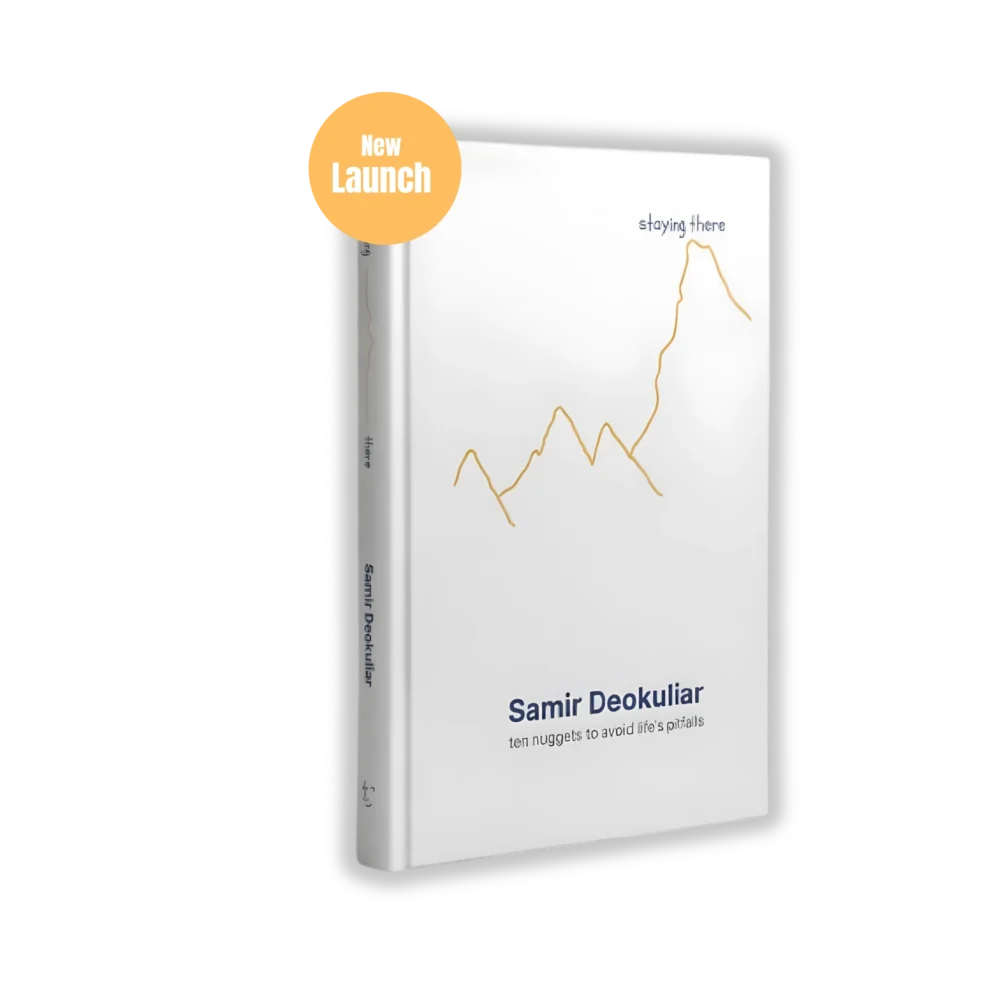
In my upcoming book Staying There, I’ll explore how to maintain meaning once you’ve achieved success: how to stay grounded, authentic, and grateful when life moves fast.
Because real success isn’t about reaching a destination; it’s about becoming the kind of person who can flourish once you arrive.
Reflect & Act
Like every chapter in my journey, I’d like to end with reflection and action points:
- Reflect: What do you want your life to stand for?
- Identify: What strengths, experiences, or pain points could serve others?
- Act: Take one small, consistent step this week that aligns with your “why.”
- Evaluate: Are you living a story worth remembering?
Remember, purpose isn’t discovered in a single moment of revelation — it’s written daily in the quiet choices you make.
Final Thought
You were not created merely to exist or to tick boxes of success.
You were made to live on purpose.
When your actions mirror your values and your direction flows from your “why,” every setback becomes a lesson, every success a stewardship, and every day a meaningful chapter in your journey of long-term success.
You will get there — and more importantly, you’ll know why you’re there.